
Protect your company with the best cybersecurity software for small business in 2026. Learn how AI-driven cybersecurity software can stop ransomware, phishing, and Deepfakes before they ruin your business.
In 2026, the best cybersecurity software for small business has transitioned from reactive antivirus to AI-driven proactive defense. With small firms facing a 60% increase in AI-generated phishing attacks this year, implementing a cybersecurity software suite with automated threat hunting and zero-trust architecture is no longer optional. Modern cybersecurity business solutions now offer enterprise-grade protection at small-scale prices, effectively neutralizing “Deepfake” fraud and automated ransomware before they reach your network.
Introduction: The Silent Crisis Facing Main Street in 2026
Your business is being watched, but not by a person. In 2026, automated AI “bots” are scanning millions of small business networks every hour, looking for the smallest crack in your digital armor. The days of being “too small to be a target” are officially over. As the cybersecurity business landscape shifts toward autonomous warfare, small business owners are finding that the old-school antivirus they installed three years ago is as effective as a screen door against a hurricane.
The stakes have never been higher. With the inflation of 2026 driving up the cost of recovery, a single data breach can now put a mid-sized firm out of business in less than six months. However, there is a massive opportunity for those who adapt. By leveraging modern cybersecurity software for small business, you aren’t just protecting data; you are building a brand of trust that your competitors—who are likely lagging behind—simply cannot match.
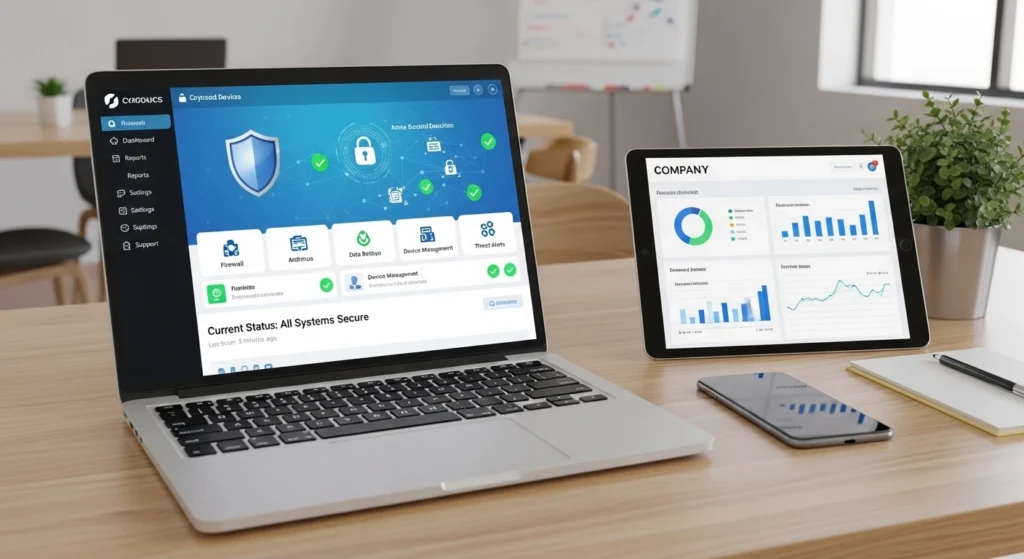
The Evolution of Cybersecurity Software: From Firewall to Fortress
Why 2026 is Different
We are currently witnessing the “Great AI Arms Race.” Hackers are using large language models to create perfectly written, hyper-personalized emails that even a trained eye can struggle to identify. Consequently, cybersecurity software has had to evolve. In 2026, the software doesn’t just look for “known viruses”; it looks for deviant behavior.
The Rise of “Behavioral AI” Defense
The top cybersecurity software for small business today utilizes Behavioral AI. If an employee suddenly starts downloading the entire client database at 3:00 AM on a Sunday, the system doesn’t wait for a human admin to wake up. It automatically freezes the account, isolates the device, and generates a report. This speed is what saves businesses from total liquidation in 2026.
Who is Most at Risk? The New Targets of the Cybersecurity Business
The Vulnerable Middle
It’s a common misconception that only tech startups need high-end protection. In reality, the most targeted sectors this year are local law firms, dental clinics, and small manufacturing plants. These businesses handle high-value data but often lack the massive IT budgets of Fortune 500 companies.
The Cost of a “Budget” Mindset
Trying to save money on cheap, outdated cybersecurity software is a classic case of being “penny wise and pound foolish.” In 2026, the average ransomware demand for a small firm has surpassed $150,000. When you factor in the loss of consumer trust and legal fees, the “affordable” option becomes the most expensive mistake a founder can make.
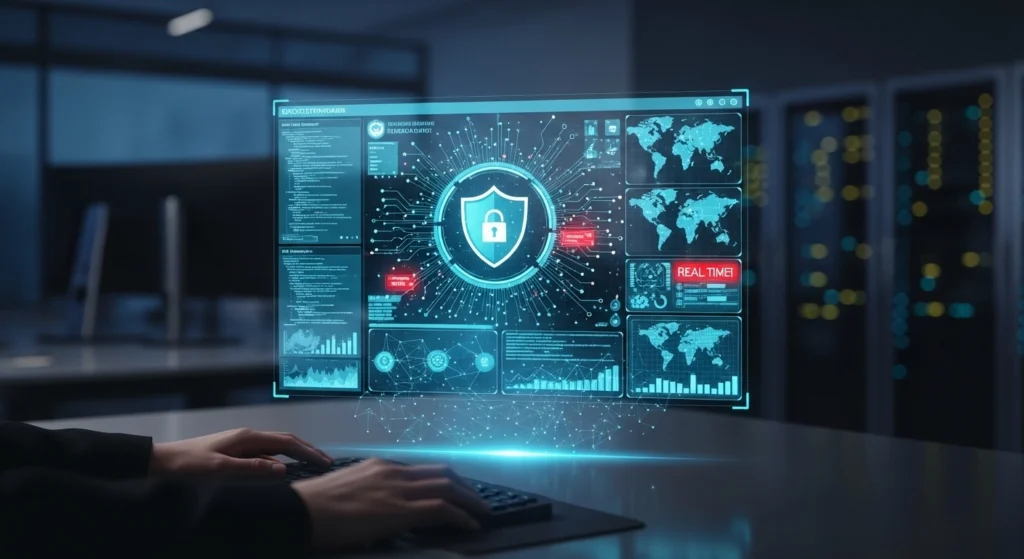
The Benefits of Modern Cybersecurity Software for Small Business
Investing in a robust cybersecurity software suite provides more than just a shield; it provides a competitive edge in the 2026 economy:
- Lower Insurance Premiums: Most cyber-insurance providers now offer significant discounts to businesses that can prove they use AI-managed defense.
- Customer Confidence: In a world of constant leaks, being able to show a “Secured by AI” certification on your website is a powerful sales tool.
- Operational Continuity: Automated systems mean less downtime. If a threat is neutralized in milliseconds, your staff never even notices a hiccup in productivity.
Future Trends: What to Expect in the Rest of 2026 and Beyond
The next six months will see a massive push toward Quantum-Resistant Encryption. While quantum computers aren’t in every home yet, hackers are already stealing encrypted data today, planning to decrypt it tomorrow when the tech is available. The Best AI Software Company providers are already integrating “Post-Quantum” algorithms into their small business packages to “future-proof” your current data.
How to Identify a Security Gap in Your Business
You don’t need a PhD in computer science to know if you’re at risk. Ask yourself these three questions:
- Can my staff access our main database from a personal phone without two-factor authentication?
- Do we have a backup that is physically or digitally “air-gapped” from our main network?
- Would I know within 60 seconds if a hacker logged into our system right now?
If the answer to any of these is “No,” your current cybersecurity business strategy is failing.
10 Actionable Tips to Secure Your Small Business Today
- Implement Zero Trust: Never trust, always verify. Every login attempt, even from inside the office, should require verification.
- Use Hardware Security Keys: Move beyond SMS codes. Physical USB security keys are the only way to be 100% immune to remote phishing.
- Audit Your “Shadow IT”: Ensure employees aren’t using unauthorized AI tools to process company data.
- Automate Your Updates: 2026 software should update itself. If you’re clicking “Remind me later,” you’re inviting a breach.
- Secure the “Remote Office”: If your team works from home, their home router is now part of your corporate network. Secure it.
- Employee Simulations: Run monthly “fake phishing” tests. The human element is still the weakest link.
- Isolate Financial Machines: Use a dedicated laptop for banking and wire transfers—nothing else.
- Verify via Voice: If a vendor or “boss” asks for a payment via email, call them on a trusted number to verify.
- Encrypt Everything: Whether the data is “at rest” or “in transit,” it should be unreadable to anyone without a key.
- Have a “Burn” Plan: Know exactly what to shut down first if you suspect an intrusion.
Common Errors in Small Business Cybersecurity
- Relying on “The Cloud” to handle everything: Cloud providers secure the infrastructure, but you are responsible for securing the data you put in it.
- Reusing Passwords across platforms: In 2026, a breach at a random pizza shop can give a hacker the keys to your business email if the passwords match.
- Ignoring IoT Devices: That “smart” coffee machine in the breakroom or the Wi-Fi security camera can be a gateway into your main server.
Little-Known Strategies: The “Honey-Pot” Method
A strategy used by elite cybersecurity software for small business providers is creating a “Honey-Pot.” This is a fake file or folder titled “Confidential Salaries” or “Master Passwords” that sits on your server. It’s useless data, but it acts as a silent alarm. If anyone—or anything—accesses it, the system immediately locks down and alerts you, catching an intruder before they find the real goods.
FAQ: Everything You Need to Know About Cybersecurity in 2026
1. Is cybersecurity software for small business expensive? Not compared to a breach. Many “SaaS” (Software as a Service) models now cost less per month than a premium coffee subscription per employee.
2. Does “Cybersecurity Software” slow down my computers? In 2026, no. Modern tools use “lightweight agents” that offload the heavy processing to dedicated security chips or specialized cloud nodes.
3. What is the difference between a firewall and an EDR? A firewall is like a fence around your house; an EDR (Endpoint Detection and Response) is like having a security guard inside every room.
4. Can’t I just use the free antivirus that comes with my OS? While better than nothing, free tools often lack the real-time AI behavioral analysis needed to stop 2026’s “zero-day” threats.
5. How often should I back up my data? In 2026, backups should be “Continuous.” Modern cybersecurity software saves versions of your files in real-time.
6. Do I need to worry about Deepfakes? Yes. Fraudsters now use AI to clone voices. Always verify “urgent” financial requests with a pre-arranged “Safe Word.”
7. Is a VPN enough for my remote workers? No. A VPN creates a tunnel, but if the device at the end of the tunnel is infected, the tunnel just helps the virus travel faster.
8. What should I look for in a cybersecurity business partner? Look for 24/7 monitoring, a clear recovery roadmap, and compliance with your specific industry regulations.
Conclusion: Take Control of Your Digital Destiny
The 2026 tech landscape is a double-edged sword. While AI offers incredible productivity tools, it also empowers the most sophisticated criminal wave in history. Choosing the right cybersecurity software for small business is no longer a “tech decision”—it is a leadership decision.
Don’t wait for a notification to tell you your accounts have been emptied. The tools to protect your dream are more accessible and powerful than ever before. Secure your perimeter today, and give your business the freedom to grow without fear.
Reliable References:
- CISA (Cybersecurity & Infrastructure Security Agency) – Small Business Resources
- National Institute of Standards and Technology (NIST) – Cybersecurity Framework 2026 Update

Café Codificado é um portal dinâmico e confiável criado especialmente para desenvolvedores. Nosso foco é entregar:
Dicas práticas para programação, produtividade, frameworks, testes, DevOps e muito mais;
Notícias atualizadas, acompanhando tendências e lançamentos do mundo da tecnologia, compiladas com relevância e sem jargões desnecessários.
O que você encontra aqui:
Artigos objetivos e comandáveis — Tutoriais, tutoriais passo-a-passo e dicas que vão direto ao ponto.
Cobertura das tecnologias que estão em alta — do universo da IA, computação em nuvem e segurança à engenharia de software e criatividade em código.
Conteúdo para todos os níveis — de iniciantes buscando praticidade, a profissionais em busca de insights estratégicos e aperfeiçoamento.
Comunidade ativa — textos humanizados, perguntinhas instigantes e espaço para você contribuir com reflexões e comentários.